- 📦 ScreenEnv lets you automate Linux desktop apps with a GUI entirely in Docker. It avoids using resource-heavy VMs.
- 🧠 Desktop automation is moving from simple scripts to AI agents that work with apps like people do.
- ⚙️ ScreenEnv can use GPU acceleration. This helps agents powered by machine learning that need a lot of visual computing.
- 🖥️ ScreenEnv has two main ways to use it: lightweight ways to replace a shell for simple jobs, and full systems for agents.
- 📈 Smol2Operator shows what desktop AI agents will be able to do, like learning interfaces and working across many apps.
ScreenEnv for Desktop Agents: Is It Worth It?
Automation is reaching deeper into AI-powered software that uses a GUI. But one technical issue still bothers developers: the desktop environment. Old software, with no APIs and heavy on the interface, still handles many jobs in finance, operations, healthcare, and government. This is where ScreenEnv comes in. It is a lightweight, Docker-based system that brings desktop automation into containers without VMs. This helps solopreneurs, automation experts, and no-code builders set up AI agents that can run visual software interfaces. Let's see what ScreenEnv is, how it works, and if you should use it for your automation.
What Is ScreenEnv and What Problem Does It Solve?
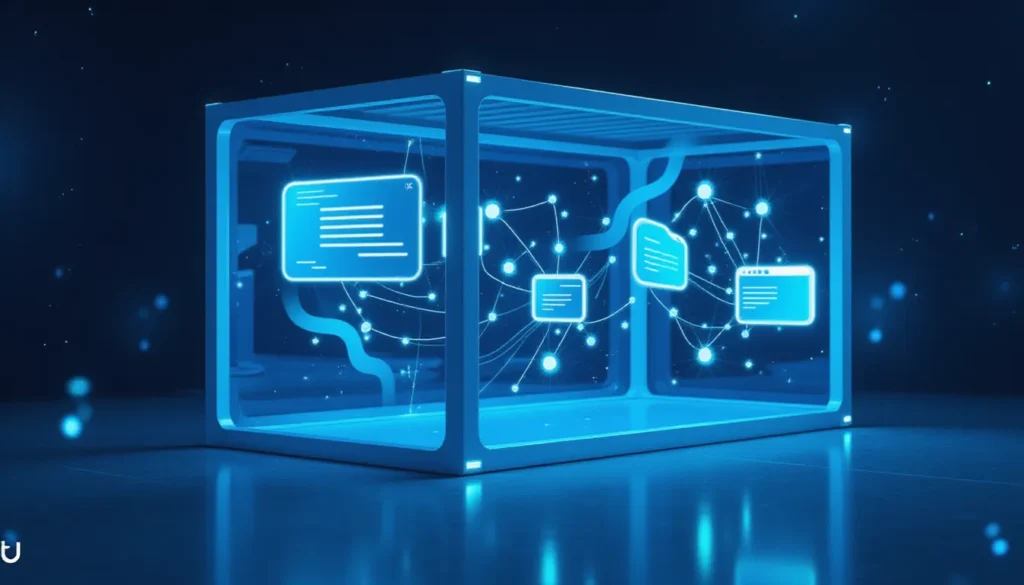
ScreenEnv is an open-source project. It puts a full desktop environment — like X11 for graphics and PulseAudio for sound — inside a Docker container. This makes it possible for GUI applications, which usually cannot run or be automated in containers, to now work in a container setup.
The Old Problem of GUI Automation
Docker has changed how backend development and API-driven automation work. But it stops when it comes to software that only has graphical interfaces. Without GUI use, common tools like pyautogui or vision-based click automation do not work. Before, the only choice was large virtual machines. Using VirtualBox or VMWare meant slow systems that used a lot of resources and were hard to manage versions for.
How ScreenEnv Helps
ScreenEnv solves this by putting graphical support right into the container. This means you do not have to manage two systems anymore: CLI-friendly containers and GUI-bound virtual machines. You can write scripts, test, and set up agents that work with desktop apps visually. They act just like human users, all inside Docker.
This helps with:
- Visual testing for errors
- Automation that does not use APIs
- Running many agents that work with actual interface parts
In short, ScreenEnv makes a way for developers to do full automation, much like they do with API and browser scripting.
How Desktop AI Agents Have Changed
Automation has made big changes. It went from cron jobs and CLI scripts to AI agents that can make choices as they go. To see how ScreenEnv fits, we need to look at how these agents got here.
From Scripts to Visual Agents
-
Phase 1: Text-Based Automation
Think of bash scripts, cron jobs, or tools likeAutoHotKey. These were fast, but not flexible. -
Phase 2: Web Automation
Then came Selenium, Puppeteer, and headless browsers. This time automated websites by using their HTML structure. -
Phase 3: API Integration
More REST APIs meant better backend control. But apps tied to a GUI were still out of reach. -
Phase 4: GUI-Based Desktop Agents
This is a newer stage. Agents "see" software like people do. They use screen pixels, button spots, OCR, and cursor moves, just like a user.
ScreenEnv's arrival makes this fourth phase scalable, easy to move, and good for developers through containers. It means no VM overhead, and no manual setup problems.
AI Enters the Picture
With computer vision and large language models (LLMs), today's agents are not just fixed bots; they learn. They can read form labels with OCR, make guesses using context models, or even ask for help when they are not sure. These features bring desktop automation into the world of true AI agents, not just scripts with mouse pointers.
Inside ScreenEnv: Main Features
ScreenEnv is not just an Ubuntu image. It is made to handle automation jobs. Here are its main features:
1. GUI Support with X11 and PulseAudio
It uses Xorg and PulseAudio. These allow graphical and audio output right inside the container. This is what lets you see and work with GUI apps launched inside Docker as if they were running on your computer.
2. GPU and CUDA Support
When you set up agents that use models like YOLO, Tesseract OCR, or Stable Diffusion, GPU computing can be important. ScreenEnv can use GPU passthrough support. This is helpful for agents doing:
- Image classification
- Document reading that uses a lot of OCR
- Real-time interaction based on vision
3. Multi-Agent Compatibility
Want to run five bots on five desktop apps and they won't interfere? ScreenEnv makes this simple. You can launch containers at the same time, each with its own screen and storage.
4. Remote Streaming and Debugging
Tools like RustDesk and Sixel let you view the GUI from far away, even streaming it. Developers can watch agents work and fix issues in live sessions without needing real monitors.
This makes ScreenEnv a cloud-native remote desktop lab for testing and making visual automation bigger.
The Two Ways to Use Agents
ScreenEnv works with two main ways of using it, depending on your needs:
1. Shell Replacement (Quick + Simple Method)
This way uses ScreenEnv to run a single old desktop app. You put the full program into a container, show it visually, and use tools like xdotool, pyautogui, or even LLM agents to work with it.
Examples:
- Filling out insurance policy data
- Moving records from desktop CRMs
- Clicking through a license renewal tool
This works well for people working alone or consultants who want to automate single pieces of software without writing all new code.
2. Full-Stack Agent Development (Advanced + Scalable)
Here, ScreenEnv just provides the space. Agents have memory, ways to make choices, and sometimes LLM-powered thinking. They work with several apps at once, record what they do, and talk to APIs, databases, or user interfaces in real time.
Examples:
- An always-on customer support agent checking dashboards and emails, and answering to events
- Technical agents setting up software tools on the desktop based on scripts, instructions, or AI prompts
This is where ScreenEnv helps a lot in modern software systems.
Why This Matters for Bot-Engine, No-Coders & Low-Code Builders
Platforms like Bot-Engine make automation more open. They turn manual tasks into drag-and-drop logic or simple code. This helps non-developers set up good automation systems. ScreenEnv adds to this.
Key Benefits for Bot-Engine Users
- Run GUI-based automations started from Zapier, Make.com, or Google Automation
- Build "hybrid workflows" that first get data via API, then put it into desktop tools you cannot change
- Make solutions local that use screen-based language AI to work with tools in other languages
This is a big step for no-code workflows. Before, bots only worked with APIs or web tasks. Now they can:
- Submit visa forms using GUI apps
- Control POS software made in QT or JavaFX
- Start, set up, and watch Windows or Debian programs with code
ScreenEnv easily works as the system for this kind of automation.
Practical Examples of Use Cases
Let's look at times when ScreenEnv has a clear advantage:
Legacy Software Interaction
Many industries still use old tools like Tally ERP, SAP GUI, or Windows-only CRM clients. With ScreenEnv:
- Agents can click dropdowns, read forms with OCR, and send actions just like users do.
Form Automation for Government/Finance
Government websites often do not have APIs or documentation. Using logic based on vision, agents hosted in ScreenEnv can:
- Upload documents
- Match and fill fields
- Get past UI errors or random messages
Document Handling Workflows
Many office workers manually scan, rename, and sort PDFs. They do this using GUI apps on their computers. Bots running in ScreenEnv can:
- Auto-open PDF viewers
- Get or add stamps
- Store files in order across folders
Onboarding & System Configuration Agents
ScreenEnv-based agents can be made to:
- Install, set up, and test desktop tools
- Change system settings
- Check if users were created or if file structures are right
It helps DevOps teams by adding a GUI layer for setup steps that were manual before.
Smol2Operator and the Future of GUI-First AI Agents
Smol2Operator is an early effort to mix self-serve AI automation and GUI control without human management.
What is Smol2Operator?
Smol2Operator is a system where agents use LLMs (Large Language Models) to run desktop GUIs based on learned actions. Instead of using scripts that break easily, these agents:
- Watch program interfaces
- Learn steps by watching tutorials
- Act based on natural language commands
Think of it as the modern desk assistant: trained once, ready for anything.
What This Means for Automation
By using ScreenEnv with Smol2Operator:
- Agents learn interfaces when they see them
- Jobs like “Balance this ledger” or “Upload all invoices” happen with very little code
- Even old apps with bad documentation can be automated using AI thinking
This changes how we talk about automation. It moves from “how do I script that GUI?” to “how can my agent learn this interface?”
How Docker and VMs Compare
Let’s see how ScreenEnv with Docker compares to older virtual machine setups:
| Feature | Docker + ScreenEnv | Traditional VM |
|---|---|---|
| Startup Time | Seconds | Minutes |
| Easy to Move | Easy image backups | Large, slower VM exports |
| Snapshots | Lightweight, easy to copy | Heavy and tied to state |
| Works with DevOps | Made for CI/CD | Needs SOC/VM control |
| Cost | Low (especially with cloud GPUs) | High system cost |
| Running Many at Once | Many agents side-by-side | Multi-VM setup wastes resources |
ScreenEnv helps automation grow like cloud services, not like old IT systems in an office.
What ScreenEnv Cannot Do and Things to Think About
ScreenEnv is good, but it is not perfect for everyone.
- 🧩 OS Limitation: Right now it works for Linux GUI apps. Windows/macOS software needs other ways to run it or full VM use.
- 🔨 Custom Tuning: Some old apps have old dependencies, like outdated GTK or Java libraries. You might need to make manual changes.
- 🖥️ Visual AI Needs: If your agents use a lot of image recognition, you might need cloud GPU acceleration or a powerful computer.
But for modern Linux apps, open-source GUIs, and setups you can change, ScreenEnv works well.
How to Get Started with ScreenEnv & Agent Projects
Want to try it? Here's what you need to start:
Tools You’ll Need
- Docker (make sure it can use a GPU if you need it)
- Tools for scripting (Python, Node.js, or even Bash)
- Libraries like OpenCV, pyautogui, Tesseract, or Whisper
- Optionally: Language Models via APIs (OpenAI, Anthropic)
Quick Start Checklist
- Set up Docker with GPU and
--privilegedmode - Get a ScreenEnv Dockerfile from GitHub
- Add your app installer or program to the image
- Write scripts to automate GUI actions
- Test using streaming UIs or remote shells
- Then change, use, and run things!
No-code choices are coming. Expect tools like Bot-Engine UIs to record GUI actions and add AI actions without writing code.
Is ScreenEnv Worth It?
For anyone automating GUI-bound software, ScreenEnv is a big help:
- No more slow VMs
- Works fully with DevOps
- Run agents like containers: fast, consistent, and easy to copy
- Helps with mixed automation flows: API + GUI 🔁
If you are setting up your first visual AI agent or many for clients, ScreenEnv is a good way to do it.
If you want your bots to not just think, but see and act, start here.
What’s Next in Desktop Agent Automation?
ScreenEnv's tools are growing. But it is only one part of bigger changes. Next up:
- 🧠 LLM Agents with Visual Attention will fully replace hardcoded scripts
- 🔁 Visual–to–Action Datasets help agents learn what users do from tutorials
- 🧩 Automation control connecting API, CLI, and GUI together
- 🌍 Community-Contributed Templates for common app setups (QuickBooks, Excel, etc.)
From people automating client tasks to big AI operations teams, the GUI change, with ScreenEnv's help, is happening.
Citations
- “ScreenEnv lets full desktop environments run inside Docker containers without needing VMs.”
- “Smol2Operator helps GUI agents use LLMs to control system interfaces.”
- “ScreenEnv works with RustDesk and Sixel-based streaming for GUI and remote showing in containers.”
- “Many GUIs are still stuck in old apps, making desktop agents the only way to automate them.”